
Metallization of CVD diamond oriented for the electronic and semiconductor industry
Diamond Metallization Technologies for Semiconductor Packaging: The Complete Guide to CVD Diamond Metallization, Interface Engineering, and Thermal Management
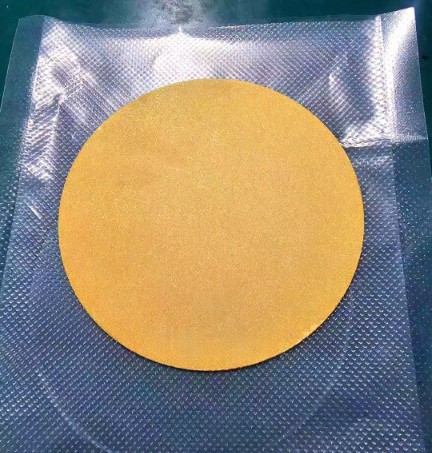
Keywords: Diamond metallization, CVD diamond metallization, diamond heat spreader, semiconductor packaging, diamond heatsink, thermal interface materials, AI chip cooling, GaN packaging, laser packaging, RF packaging, diamond thermal management
Diamond Metallization: Unlocking the Full Potential of CVD Diamond for Advanced Semiconductor Applications
Artificial intelligence, high-performance computing (HPC), electric vehicles, silicon photonics, and next-generation RF communications are driving semiconductor power densities to unprecedented levels. Today's AI accelerators, GaN RF amplifiers, SiC power modules, laser diodes, and optical transceivers routinely generate localized heat fluxes exceeding 1,000 W/cm², making thermal management one of the biggest bottlenecks in electronic system performance.
Among all known engineering materials, CVD diamond offers the highest thermal conductivity—up to 2,200 W/m·K—while combining excellent electrical insulation, low dielectric loss, exceptional mechanical stiffness, and a coefficient of thermal expansion (CTE) closely matched to many semiconductor materials. These unique properties make diamond the ideal thermal spreader for advanced electronic packaging.
However, diamond's greatest advantage also creates its greatest challenge.
Diamond is chemically inert and naturally exhibits poor wettability with most engineering metals. Copper, gold, nickel, and solder alloys cannot directly form reliable, low-resistance interfaces with bare diamond surfaces. Without proper interface engineering, thermal boundary resistance (TBR) increases significantly, mechanical adhesion is weak, and long-term reliability under thermal cycling deteriorates.
For this reason, diamond metallization is one of the most critical enabling technologies in semiconductor packaging.
At DIASEMI, we view metallization as much more than applying a metallic coating. It is a highly engineered interface designed to maximize heat transfer, ensure reliable bonding, and support decades of operation under harsh thermal conditions.
Why Diamond Metallization Is Essential
Unlike conventional metal substrates, CVD diamond cannot be directly soldered, electroplated, or wire bonded.
Metallization creates an engineered transition layer that performs multiple functions simultaneously:
Forms chemically active carbide interfaces with diamond
Reduces thermal boundary resistance (TBR)
Enables AuSn eutectic soldering, silver sintering, and copper bonding
Provides adhesion for electroplated copper or gold
Prevents interface degradation during high-temperature processing
Improves thermal cycling reliability
Supports hermetic packaging for photonics and aerospace electronics
For high-power semiconductor devices, interface engineering often determines overall package performance more than the intrinsic thermal conductivity of the diamond itself.
Understanding Thermal Boundary Resistance (TBR)
Many engineers focus on bulk thermal conductivity when selecting thermal materials. However, in modern semiconductor packages, the dominant thermal bottleneck is often the interface rather than the material.
Heat flowing from a semiconductor junction into a diamond heat spreader must cross several interfaces:
Semiconductor Device
↓
Die Attach Material
↓
Metallization Layer
↓
Diamond
↓
Base Plate
↓
Cooling System
Every interface introduces additional thermal resistance. Even a diamond substrate with a thermal conductivity exceeding 2,000 W/m·K cannot perform optimally if the metallized interface is poorly engineered.
Reducing thermal boundary resistance (TBR) has therefore become one of the primary objectives of modern diamond metallization technology.
Four Major Diamond Metallization Technologies
Several metallization methods have been developed for CVD diamond. Each offers distinct advantages depending on the application.
1. Magnetron Sputtering (Physical Vapor Deposition)
Magnetron sputtering has become the preferred metallization technology for high-performance semiconductor packaging.
Inside a high-vacuum chamber, energetic argon ions bombard a metal target, ejecting atoms that condense onto the diamond surface. Titanium, tungsten, molybdenum, and chromium are commonly used because they readily form stable carbide layers.
Subsequent vacuum annealing promotes the formation of ultra-thin TiC, WC, or Mo₂C interfacial layers that chemically bond the metal to the diamond while maintaining excellent thermal conductivity.
Advantages
Nanometer-scale thickness control
Dense, uniform coatings
Excellent adhesion
Low contamination
Wafer-scale compatibility
Outstanding thermal performance
Typical Applications
AI processor heat spreaders
High-performance computing (HPC)
GaN-on-diamond RF devices
SiC power modules
Laser diode packages
Optical communication modules
At DIASEMI, magnetron sputtering forms the foundation of many of our advanced diamond metallization solutions because it provides the best combination of precision, reliability, and thermal performance.
2. Electroless Metallization
Electroless plating deposits nickel-phosphorus coatings through autocatalytic chemical reactions.
Although this process offers excellent uniformity and high manufacturing throughput, the interface is primarily mechanically anchored rather than chemically bonded.
Consequently, electroless plating is better suited for cost-sensitive industrial applications than for premium semiconductor thermal management.
Advantages
Low capital investment
Excellent coating coverage
High-volume production capability
Suitable for conductive build-up layers
Limitations
Higher thermal resistance
Additional nickel-phosphorus interface
Wet chemical processing
Lower reliability under extreme thermal loading
3. Electron Beam and Thermal Evaporation
Vacuum evaporation techniques remain important for precision electronic packaging.
Thermal evaporation is commonly used for aluminum, chromium, and copper, while electron beam evaporation enables deposition of refractory metals such as tungsten, molybdenum, and tantalum.
These processes generate highly pure coatings with excellent surface quality, making them attractive for optical packaging and photonic applications.
Typical applications include:
VCSEL packaging
Infrared optical windows
Diamond optical components
MEMS devices
Laser submounts
4. Laser-Assisted Metallization
Laser-assisted metallization combines localized heating with metallurgical reactions to create exceptionally strong bonded interfaces.
Laser energy promotes carbide formation directly at the diamond surface, producing robust metallurgical joints.
However, excessive laser power may induce graphitization, requiring precise process optimization.
Laser metallization is typically reserved for specialized thermal structures rather than large-volume semiconductor manufacturing.
Which Metallization Technology Delivers the Best Thermal Performance?
For semiconductor thermal management, performance is determined by much more than adhesion strength.
An optimized metallization layer should simultaneously provide:
Low thermal boundary resistance
High mechanical integrity
Controlled carbide thickness
Minimal residual stress
Excellent solderability
Long-term thermal cycling reliability
This is why the highest-performing semiconductor packages increasingly employ vacuum-deposited multilayer metallization systems rather than thick single-metal coatings.
Multilayer Metallization: The Industry Standard
Modern semiconductor packaging rarely relies on a single metallic layer.
Instead, multiple functional layers are combined into an engineered interface.
Examples include:

Each layer performs a unique function, including carbide formation, diffusion barrier protection, oxidation resistance, solderability, and compatibility with downstream assembly processes.
Selecting the Right Diamond Metallization Solution
Different semiconductor applications require different interface architectures.

Rather than selecting a coating based solely on adhesion strength, DIASEMI designs metallization systems around the complete package architecture, including solder alloys, package materials, thermal requirements, and reliability targets.
Reliability Matters More Than Initial Adhesion
Initial pull-off strength is only one measure of interface quality.
For mission-critical semiconductor systems, long-term reliability is the true benchmark.
DIASEMI evaluates metallized diamond interfaces using rigorous qualification methods, including:
Thermal cycling
High-temperature storage
Power cycling
High-temperature/high-humidity (85°C/85% RH)
Hermetic sealing compatibility
Interface microstructure characterization
Thermal resistance measurements
Cross-sectional SEM analysis
The goal is not simply achieving strong initial adhesion, but maintaining stable thermal performance throughout the product's lifetime.
Future Trends in Diamond Metallization
As semiconductor packaging evolves toward heterogeneous integration, chiplet architectures, co-packaged optics, and AI computing, diamond metallization is rapidly advancing beyond conventional coating technologies.
Key industry trends include:
Nanometer-scale carbide engineering
Functionally graded multilayer interfaces
Ultra-low thermal boundary resistance
Wafer-level metallization
Copper-direct bonding
Environmentally friendly dry vacuum processes
AI-optimized thermal package design
These innovations are enabling diamond to move from a niche thermal material to a mainstream platform for next-generation semiconductor packaging.
Why Choose DIASEMI?
At DIASEMI, we specialize in advanced CVD diamond solutions engineered specifically for the electronics and semiconductor industries. Our expertise extends beyond diamond growth to include precision metallization, interface engineering, and application-specific thermal design.
Our capabilities include:
Precision CVD diamond metallization
Ti, W, Cr, Mo, Pt, Au, Cu multilayer systems
Semiconductor-qualified surface preparation
Laser package metallization
Diamond heat spreaders
High-power RF thermal substrates
Customized metallization architectures
Low thermal boundary resistance (TBR) interface design
Engineering support for advanced electronic packaging
By combining premium CVD diamond materials with optimized metallization technologies, DIASEMI helps customers achieve higher thermal performance, greater package reliability, and improved device lifetime across AI computing, power electronics, photonics, aerospace, defense, and next-generation semiconductor applications.
Conclusion
The future of semiconductor performance will be defined not only by transistor scaling but also by thermal management. As device power densities continue to rise, the interface between diamond and metal becomes increasingly important.
Successful diamond metallization requires more than depositing a metallic film—it demands precise interface engineering that minimizes thermal resistance, maximizes reliability, and integrates seamlessly into advanced packaging processes.
At DIASEMI, we are committed to advancing diamond metallization technologies that unlock the full thermal potential of CVD diamond, enabling the next generation of AI processors, power semiconductors, photonic devices, RF systems, and high-performance electronics.